


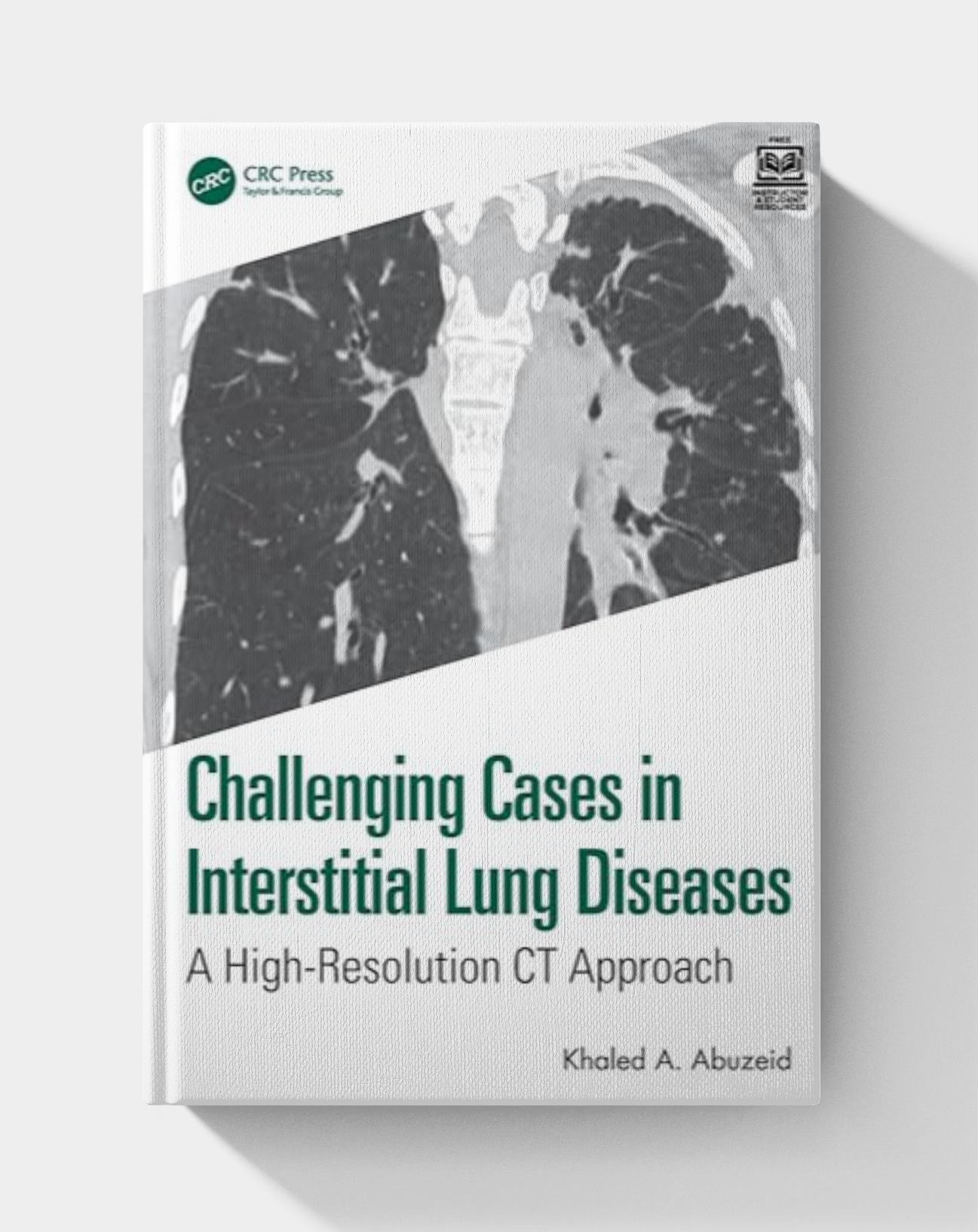
Description
By:
Authored by Dr. Khaled Ahmed Abuzeid, this 240-page guide features 30 real-world interstitial lung disease (ILD) cases, concentrating on high-resolution CT (HRCT) imaging to help clinicians navigate complex fibrosing lung disorders. Dr. Abuzeid presents a structured diagnostic toolkit designed to support both beginners and experienced specialists in pulmonology and radiology.
⭐ Key Features
• Case-Based Learning: Thirty carefully selected patient cases cover important diagnoses such as idiopathic pulmonary fibrosis, sarcoidosis, hypersensitivity pneumonitis, and connective-tissue related ILDs.
• Structured Methodology: Includes the ‘4-Step Approach’ and the ‘Expert Flowchart’—practical frameworks for interpreting imaging findings and guiding diagnostic decisions.
• Rich Visual Learning: Combines HRCT scans, clinical-pathological correlation, and illustrative diagrams to reinforce essential concepts and improve pattern recognition.
• Diagnostic Depth: Explores key imaging patterns and definitions including honeycombing, traction bronchiectasis, and ground-glass opacities, with strong alignment to current UIP classification standards.
• Ideal Reference: Serves as a practical resource for daily clinical decision-making, multidisciplinary discussions, and challenging case evaluation.
🎯 Target Audience
• Radiologists & Pulmonologists looking to strengthen HRCT interpretation skills
• Respiratory & Internal Medicine Trainees building confidence in ILD diagnosis
• Multidisciplinary Clinicians seeking a structured approach to complex interstitial lung disease cases
🔍 Why It Stands Out
- Real-World Relevance: Uses authentic patient-based scenarios to improve practical diagnostic reasoning.
- Clear, Systematic Tools: The 4-Step Approach and Expert Flowchart make complex imaging interpretation easier to follow.
- Visual & Clinical Integration: Combines imaging, pathology correlation, and explanatory visuals for stronger understanding.
- Clinical & Educational Value: Excellent both as a learning resource and as a reliable reference in everyday clinical practice.


Reviews
There are no reviews yet.