


Description
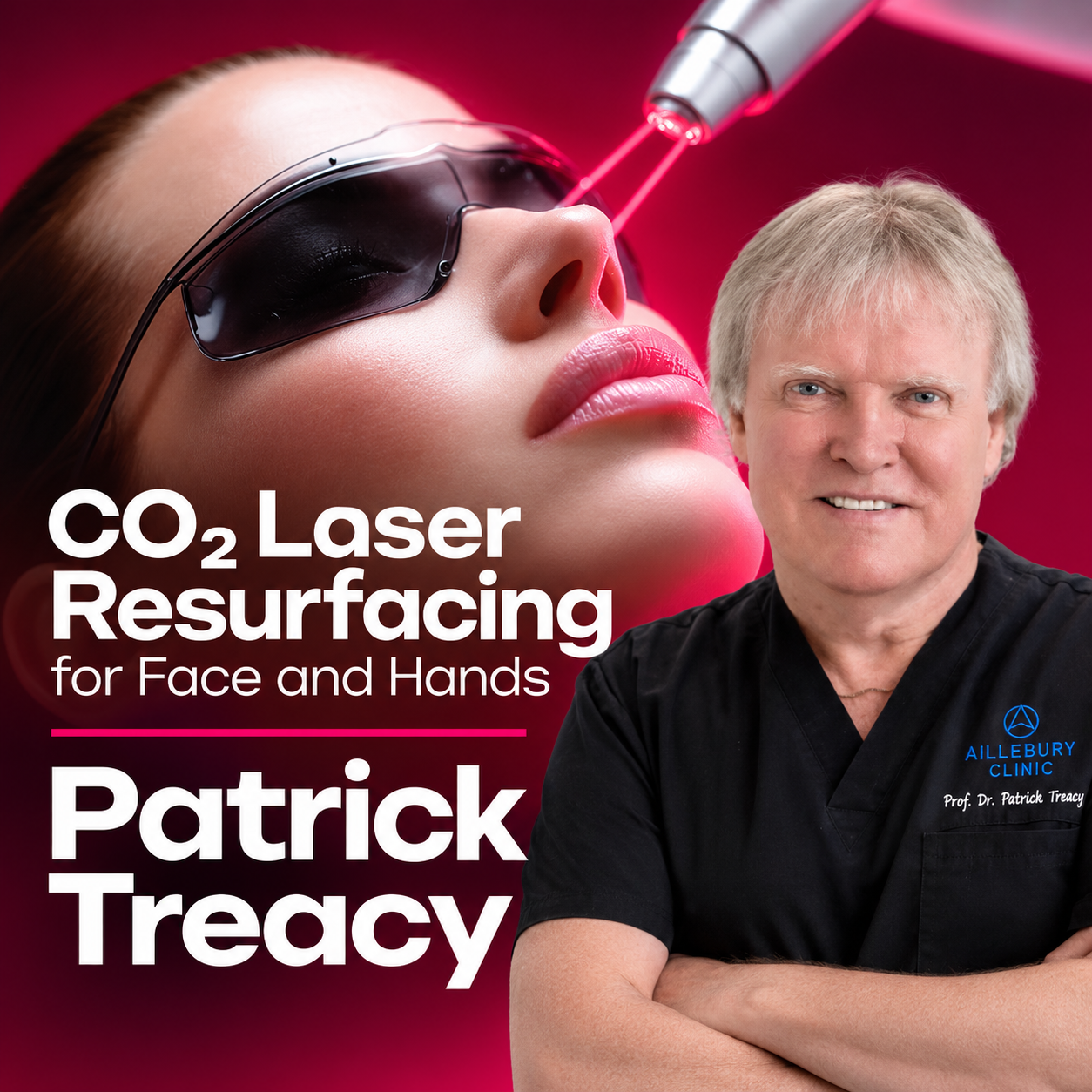
CO₂ Laser Resurfacing for Face and Hands
Ablative & Fractional CO₂ Laser Protocols
Presented by Patrick Treacy
OHI-S CO₂ Laser Resurfacing for Face and Hands
Ablative & Fractional CO₂ Laser Protocols with Patrick Treacy
3 Lessons | 33 Minutes | Face, Periorbital Area & Hands
Explore a clinically focused approach to ablative and fractional CO₂ laser resurfacing with OHI-S CO₂ Laser Resurfacing for Face and Hands, presented by Patrick Treacy, Professor in aesthetic and regenerative medicine.
This concise three-lesson program focuses on three important treatment zones:
- Full Face
- Periorbital Area
- Hands
The course connects fundamental laser safety with clinical preparation, anatomical adaptation, resurfacing strategy, and complication prevention.
Key areas include:
- CO₂ laser resurfacing
- ActiveFX facial resurfacing
- Ablative laser techniques
- Fractional CO₂ resurfacing
- Patient and skin assessment
- Clinical preparation
- Anesthesia considerations
- Laser setup principles
- Anatomical customization
- Thermal-damage control
- Periorbital resurfacing
- Ocular safety
- Hand rejuvenation
- Thin-skin considerations
- Layering and pass strategy
- Treatment-zone coverage
- Burn-risk reduction
The central clinical principle is:
Match Treatment Intensity to Anatomy, Skin Characteristics, Treatment Goals, and Safety Requirements
Course Details
- Course: CO₂ Laser Resurfacing for Face and Hands
- Provider: OHI-S
- Instructor: Patrick Treacy
- Lessons: 3
- Official Duration: 33 Minutes
- Language: English
- Primary Field: Aesthetic Medicine
- Official OHI-S Track: Laser Therapy
- Main Technology: CO₂ Laser
- Techniques Discussed: Ablative & Fractional Resurfacing
- Treatment Areas: Face, Periorbital Region & Hands
Course Overview
CO₂ laser resurfacing is an energy-based aesthetic procedure used in appropriately selected patients for controlled resurfacing of the skin.
Successful treatment requires more than operating a laser device.
The clinician must understand:
- Patient selection
- Skin characteristics
- Treatment depth
- Tissue response
- Thermal injury
- Anatomical variation
- Eye safety
- Post-procedural considerations
This course organizes those issues into a short clinical workflow.
A useful conceptual sequence is:
Assess → Prepare → Protect → Customize → Treat → Monitor
Ablative vs. Fractional CO₂ Resurfacing
The program compares concepts involved in:
Fully Ablative Resurfacing
Treating a more continuous area of tissue.
Fractional Resurfacing
Delivering treatment through fractional microthermal treatment zones while leaving intervening tissue untreated.
The appropriate approach depends on factors such as:
- Treatment objective
- Anatomy
- Skin characteristics
- Desired recovery profile
- Clinical risk
The course emphasizes adaptation rather than using one identical protocol for every anatomical region.
ActiveFX
The facial portion of the course includes ActiveFX CO₂ laser resurfacing.
The program reviews the clinical preparation and overall treatment workflow associated with this approach.
Topics include:
- Treatment preparation
- Anesthesia strategy
- Laser setup
- Treatment-depth considerations
- Fractional vs. ablative strategy
- Clinical application
LESSON 1
CO₂ Laser Resurfacing: Clinical Preparation and Step-by-Step Application
Instructor: Patrick Treacy
Duration: 14 Minutes
The first lesson introduces the full clinical workflow for facial CO₂ resurfacing.
Major areas include:
- Preparation for ActiveFX resurfacing
- Topical anesthesia concepts
- Regional nerve-block considerations
- CO₂ laser machine preparation
- Treatment intensity and depth
- Fractional vs. fully ablative approaches
- Clinical demonstration of facial resurfacing
Clinical Preparation
Preparation is a critical part of any laser procedure.
Before treatment, clinicians should consider:
- Indication
- Skin characteristics
- Relevant medical history
- Treatment area
- Patient expectations
- Safety precautions
The aim is to ensure that the intended treatment strategy is appropriate for the individual patient.
Anesthesia Considerations
The course reviews both:
- Topical anesthesia
- Regional nerve-block techniques
as part of the clinical preparation for facial resurfacing.
These techniques require appropriate medical training, patient assessment, and knowledge of contraindications and potential complications.
Anatomical Customization
The face should not be treated as a single uniform surface.
Different areas vary in:
- Skin thickness
- Sebaceous density
- Underlying structures
- Sensitivity
- Healing characteristics
The program therefore emphasizes adapting treatment strategy to the anatomical region.
Thermal-Damage Control
CO₂ resurfacing produces controlled thermal effects.
The clinical objective is to balance:
Adequate Treatment Effect
with:
Avoidance of Excessive Thermal Injury
This requires appropriate understanding of the device, tissue response, and treatment strategy.
Layering & Pass Control
The course discusses treatment layering and pass control as part of resurfacing technique.
The important principle is that repeated treatment of the same tissue changes cumulative thermal exposure.
Therefore, careful control and visual assessment are important components of safe laser practice.
LESSON 2
CO₂ Laser for the Periorbital Area: Skin Tightening and Resurfacing
Instructor: Patrick Treacy
Duration: 8 Minutes
The second lesson focuses specifically on the periorbital region.
Topics include:
- Periorbital skin characteristics
- Topical anesthesia
- Regional anesthesia when appropriate
- Ocular protection
- Treatment intensity and density
- Fractional vs. ablative approaches
- Depth control
- Layering
- Pass management
Why the Periorbital Area Is Different
The skin around the eyes is thinner and anatomically more sensitive than many other facial areas.
Treatment therefore requires particular attention to:
- Depth
- Energy delivery
- Thermal exposure
- Eye protection
- Treatment overlap
This makes periorbital resurfacing a higher-sensitivity application of CO₂ laser technology.
Ocular Protection
Eye protection is a fundamental safety issue during laser treatment around the orbit.
The course specifically emphasizes ocular protection measures as part of the periorbital protocol.
This is one of the most important safety topics in the program.
Periorbital Tightening
The program examines CO₂ laser resurfacing in the context of:
- Skin resurfacing
- Textural improvement
- Tissue tightening
around the periorbital region.
Treatment strategy must account for the thin and sensitive nature of the tissue.
Depth Control
Depth control is particularly important around the eye.
The objective is controlled treatment without unnecessary tissue injury.
This requires understanding of:
- Anatomy
- Device behavior
- Tissue response
- Treatment endpoint
LESSON 3
Ablative CO₂ Laser Resurfacing for Hands
Instructor: Patrick Treacy
Duration: 10 Minutes
The third lesson shifts from facial resurfacing to rejuvenation of the hands.
Topics include:
- Skin-type evaluation
- Facial vs. hand skin anatomy
- Treatment-depth considerations
- Fractional vs. fully ablative approaches
- Thin and sensitive hand skin
- Layering
- Pass control
- Dorsal hand coverage
- Lateral hand coverage
- Avoiding excessive overlap
- Burn-risk reduction
Hand Skin vs. Facial Skin
The hands should not automatically receive the same resurfacing approach used for the face.
Important differences can include:
- Skin thickness
- Adnexal structures
- Healing characteristics
- Subcutaneous anatomy
- Treatment tolerance
The course emphasizes adapting the protocol accordingly.
Dorsal Hand Resurfacing
The dorsal hand is a common aesthetic treatment area because visible changes in:
- Texture
- Pigmentation
- Skin quality
- Photoaging
may become prominent with age and environmental exposure.
CO₂ resurfacing requires appropriate patient selection and conservative anatomical consideration.
Coverage Strategy
Treatment should be planned to achieve consistent coverage while avoiding uncontrolled overlapping treatment zones.
The overall principle is:
Even Coverage Without Excessive Cumulative Thermal Exposure
Face vs. Hands
A central educational lesson from this program is that identical device settings or treatment strategies should not be assumed appropriate across different anatomical areas.
A functionally useful framework is:
Treatment Goal + Anatomy + Skin Characteristics + Device Characteristics + Safety
Patient Selection
Patient selection is essential before ablative laser resurfacing.
Evaluation may include:
- Skin characteristics
- Medical history
- Previous procedures
- Healing history
- Treatment goals
- Ability to follow aftercare
- Risk factors for complications
Not every patient is an appropriate candidate for an ablative procedure.
Safety in CO₂ Laser Resurfacing
Important safety themes addressed by the course include:
- Appropriate clinical preparation
- Ocular protection
- Anatomy-specific treatment
- Depth awareness
- Thermal control
- Avoidance of excessive overlap
- Careful pass management
Potential Complications
Practitioners performing ablative laser procedures should be familiar with complications that can occur after resurfacing.
These may include clinically important problems involving:
- Prolonged erythema
- Pigment alteration
- Infection
- Delayed healing
- Scarring
- Excessive thermal injury
Appropriate prevention, recognition, and management require formal clinical training.
Why Anatomy Matters
The course demonstrates three distinct anatomical environments:
Full Face
Broader resurfacing strategy.
Periorbital Region
Very thin tissue with particular eye-safety requirements.
Hands
Different anatomy and healing considerations requiring adaptation of the treatment approach.
This makes the course valuable as an introduction to anatomy-specific laser customization.
Clinical Decision-Making
Rather than thinking:
“What settings should I use for CO₂ resurfacing?”
the safer and more clinically meaningful question is:
“What treatment strategy is appropriate for this patient, this anatomical area, this device, and this treatment objective?”
This reduces the risk of applying a universal protocol without considering individual variation.
Major Topics Covered
- CO₂ Laser Resurfacing
- Fractional CO₂ Laser
- Ablative CO₂ Laser
- ActiveFX
- Facial Resurfacing
- Skin Resurfacing
- Laser Skin Rejuvenation
- Periorbital Resurfacing
- Periorbital Tightening
- Hand Rejuvenation
- Hand Laser Resurfacing
- Aesthetic Medicine
- Cosmetic Dermatology
- Laser Dermatology
- Laser Safety
- Ocular Protection
- Clinical Preparation
- Regional Anesthesia
- Laser Treatment Planning
- Thermal Damage Control
- Layering Techniques
- Pass Control
- Skin Type Evaluation
- Energy-Based Devices
Who Should Take This Course?
This program is most relevant to appropriately trained and licensed clinicians practicing:
- Aesthetic Medicine
- Dermatology
- Cosmetic Dermatology
- Plastic Surgery
- Facial Plastic Surgery
- Laser Medicine
- Energy-Based Aesthetic Treatments
The strongest audiences are:
- Aesthetic Medicine Physicians
- Dermatologists
- Plastic Surgeons
It may also be useful for other licensed medical professionals whose regulated scope includes laser-based aesthetic procedures.
Why This Course Is Useful
The program condenses CO₂ resurfacing into three highly practical anatomical applications.
Face
- ActiveFX
- Preparation
- Anesthesia
- Full-face strategy
Periorbital Area
- Thin skin
- Depth control
- Eye protection
- Tightening
Hands
- Different anatomy
- Ablative/fractional adaptation
- Coverage strategy
- Thermal-risk reduction
The educational pathway is:
Preparation → Safety → Anatomical Customization → Treatment Strategy → Complication Prevention
Important Training Notice
CO₂ laser resurfacing is a medical procedure that can cause serious complications when used improperly.
A short recorded course can support understanding of:
- Workflow
- Treatment principles
- Device concepts
- Anatomy
- Safety considerations
but should not be considered a substitute for:
- Device-specific training
- Supervised clinical instruction
- Appropriate laser-safety training
- Medical credentialing
- Hands-on competency
- Local regulatory requirements
Exact treatment parameters and anesthesia protocols should follow the clinician’s formal training, the specific device instructions, applicable regulations, and patient-specific assessment.
Product Summary
- Product: CO₂ Laser Resurfacing for Face and Hands
- Provider: OHI-S
- Instructor: Patrick Treacy
- Lessons: 3
- Official Duration: 33 Minutes
- Language: English
- Primary Field: Aesthetic Medicine
- Official Track: Laser Therapy
- Treatment Areas: Face, Periorbital Area & Hands
- Core Modalities: Ablative & Fractional CO₂ Laser Resurfacing
4. Short Description
OHI-S CO₂ Laser Resurfacing for Face and Hands is a focused 3-lesson, 33-minute aesthetic medicine course presented by Patrick Treacy.
The course covers clinical preparation for CO₂ resurfacing, ActiveFX facial treatment concepts, anesthesia considerations, fractional and fully ablative approaches, thermal and depth control, periorbital resurfacing and ocular safety, and anatomy-specific ablative resurfacing of the hands.
Topics
Lesson 1. CO₂ Laser Resurfacing: Clinical Preparation and Step-by-Step Application
- Aesthetic preparation for ActiveFX (CO₂ laser resurfacing)
- Application of topical anesthetics
- Application of 23% lidocaine with 3.5% tetracaine
- Protocols for regional anesthesia:
- Infraorbital nerve block
- Frontal nerve block
- Setup of the CO₂ laser machine for skin resurfacing:
- Energy settings and depth control
- Fractional vs. fully ablative approaches
- Step-by-step video demonstration of CO₂ laser resurfacing application
Lesson 2. CO₂ Laser for the Periorbital Area: Skin Tightening and Resurfacing
- Topical anesthetics
- Regional nerve blocks (if indicated)
- Ocular protection measures
- Energy parameters and density selection
- Fractional vs. ablative approach
- Depth control in thin periorbital skin
- Layering technique and passes
Lesson 3. Ablative CO₂ Laser Resurfacing for Hands
- Skin type evaluation
- Differences between facial and hand skin anatomy
- Energy settings and depth control for hands
- Fractional vs fully ablative approaches
- Adjusting parameters for thin, sensitive skin
- Step-by-Step Treatment Technique:
- Layering technique and passes
- Coverage strategy for dorsal and lateral hand surfaces
- Avoiding overlap and minimizing risk of burns
Important training notice: CO₂ laser resurfacing is a medical procedure. Recorded educational material does not replace device-specific training, supervised clinical instruction, laser-safety training, medical credentialing, hands-on competency, or applicable local requirements.
Reviews
There are no reviews yet.